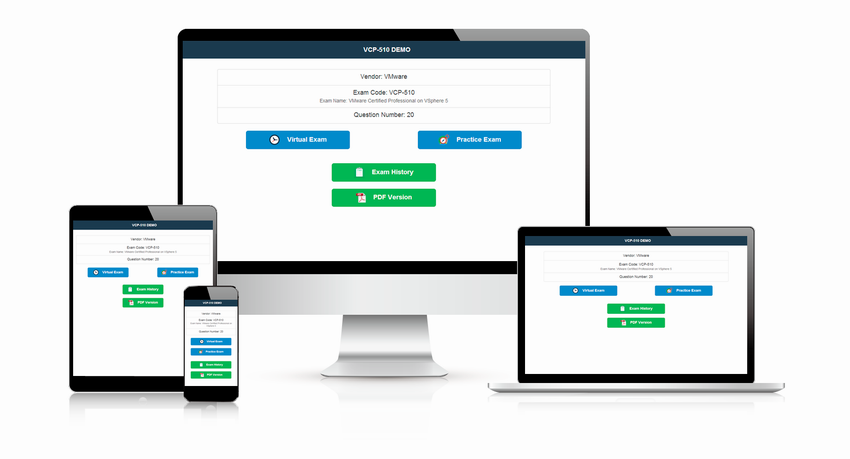
If you'd like an easy way to pass the exam SEND - Endocrinology and Diabetes (Specialty Certificate Examination), you can consider us which takes the leading position in providing the best valid and high-pass rate SEND exam preparation. You can download our free demo which is the little part of the real test dumps before.
Many candidates are headache about exam MRCPUK SEND since some of them find they have no confidence to attend the real test; some of them failed exam again and do not want to fail again. If you are still thinking about how to pass, let our Real test dumps for Endocrinology and Diabetes (Specialty Certificate Examination) help you. Every day we hear kinds of problems from candidates about their failure, our professional can always give them wise advice. Our SEND exam preparation helps thousands of candidate sail through the examination every year. If you really want to get rid of this situation, please go and follow us, everything will be easy. Below I summarize the questions about SEND - Endocrinology and Diabetes (Specialty Certificate Examination) exam preparation most candidates may care about for your reference.
4. When can I download SEND exam preparation after purchase?
Once payment is finished and then we receive your order, our system will send your password and the downloading link of SEND exam preparation you purchase by email right away. Your account will be your email address. You can login on our website and download all the purchased Real test dumps for Endocrinology and Diabetes (Specialty Certificate Examination). So please make sure that you fill the right email address which will be your login account and we will contact you by the only email address.
3. How long will my SEND exam preparation remain valid?
All our real test dumps remain valid for one year from the date of purchase. This means that any updates to SEND exam preparation (Endocrinology and Diabetes (Specialty Certificate Examination)), including but not limited to new questions and answers, or update and change by our education experts team, will be automatically downloaded on to our website, and our system will remind you and send you by email about this updates and changes of Real test dumps for Endocrinology and Diabetes (Specialty Certificate Examination). Once one year is over, you will be able to extend the validity of your product with 50% discount if you contact with our service staff.
1. What products do we offer?
◆ Valid real test dumps Based on SEND Real Test
◆ Free demo download before purchasing
◆ Regularly Updated SEND exam preparation
◆ Easy-to-read & Easy-to-handle Layout
◆ Well Prepared by Our Professional Experts
◆ Printable SEND PDF for reading & writing
◆ PDF version, Soft version and APP version, Downloadable with no Limits
◆ 24 Hour On-line Support Available, golden customer service
◆ One-year Service Warranty
◆ Money & Information guaranteed

Instant Download: Upon successful payment, Our systems will automatically send the product you have purchased to your mailbox by email. (If not received within 12 hours, please contact us. Note: don't forget to check your spam.)
2. What is our test engine of SEND exam preparation?
Our PDF file is easy to understand for candidates to use which is downloadable and printable with no Limits. Many candidates are not familiar with test engine of Real test dumps for Endocrinology and Diabetes (Specialty Certificate Examination). Test engine provides candidates with realistic simulations of certification exams experience. It capacitates interactive learning that makes SEND - Endocrinology and Diabetes (Specialty Certificate Examination) exam preparation process easier. The software test engine can be downloaded and installed on any Windows Operate System. The APP on-line test engine are available in all operate system and can be used on any electronic products.
5. If I don't have credit card, how should I buy SEND exam preparation?
Normally for most regions only credit card is available. We support every buyer to choose Credit Card payment which is safe and guaranteed for both buyer and seller. Credit Card is the most widely used in international trade business. Credit Card can only bind credit card. So please make sure you have credit card before purchasing Real test dumps for Endocrinology and Diabetes (Specialty Certificate Examination).
If you still have the other problems about SEND exam preparation, please contact with us, it is our pleasure to serve for you. If you want to know more about our discount every month or official holidays please write email to us. 100% pass for sure with our real test dumps for Endocrinology and Diabetes (Specialty Certificate Examination)! No Pass, No Pay!
MRCPUK Endocrinology and Diabetes (Specialty Certificate Examination) Sample Questions:
1. A 60-year-old man with type 2 diabetes mellitus attended for an elective laparoscopic cholecystectomy. His oral hypoglycaemic medication regimen was metformin 1 g twice daily and gliclazide 160 mg twice daily. His haemoglobin A1c concentration had been 69 mmol/mol (20-42) when checked 2 months previously.
He was admitted on the morning of surgery and was on the morning list. He had fasted from midnight and taken metformin 1 g at 05.00 h.
On examination, he weighed 82 kg.
Investigations (on admission):
serum creatinine64 umol/L (60-110)
fasting plasma glucose18.1 mmol/L (3.0-6.0)
capillary blood ketones0.2 mmol/L (<1)
According to the Joint British Diabetes Societies guideline 'Management of adults with diabetes undergoing surgery and elective procedures', what is the most appropriate next step in management to bring his preoperative glucose into the acceptable range (4.0-12.0 mmol/L)?
A) rapid-acting analogue insulin 16 units subcutaneously
B) variable-rate insulin infusion
C) gliclazide 160 mg orally
D) rapid-acting analogue insulin 8 units subcutaneously
E) cancel surgery and refer to local diabetes team
2. A 16-year-old boy was referred with concern about delayed puberty. His stature had been short as a child. He reported an increase in height at the age of 13, and had begun to develop pubic hair at the age of 14. He reported no further growth or development in the past year. His father recalled going through puberty at the age of 13.
On examination, his height was 1.60 m (between 0.4th and 2nd centile), weight was 56.4 kg (between 9th and 25th centile), genital development was Tanner stage 2 and testicular volume was 8 mL bilaterally. Pubic hair was Tanner stage 2, with no evidence of androgenic axillary hair. Bone age at the left wrist was 13.5 years.
Investigations:
serum testosterone2.9 nmol/L (9.0-35.0)
Which feature in his clinical presentation most strongly suggests a diagnosis other than constitutional delay?
A) absence of axillary hair in the presence of pubic hair
B) discordance between the height centile and the weight centile
C) 2.5-year delay in bone age
D) being below the 2nd centile for height
E) failure to progress through puberty
3. A 19-year-old man was seen in the diabetes clinic. He had lost 2 kg in weight since the diagnosis of diabetes mellitus 18 months previously. At presentation, his body mass index was 33 kg/m2 (18-25), his random plasma glucose was 18.0 mmol/L and his haemoglobin A1c was 56 mmol/mol (20-42). He was taking gliclazide, and metformin had been added later. His father and grandfather had developed diabetes mellitus during their twenties.
Investigations:
haemoglobin A1c56 mmol/mol (20-42)
serum C-peptide301 pmol/L (180-360)
anti-glutamic acid decarboxylase (GAD)
antibodiesnegative
What is the most likely diagnosis?
A) latent-onset diabetes of autoimmunity
B) maturity-onset diabetes of the young
C) chronic pancreatitis
D) type 2 diabetes mellitus
E) type 1 diabetes mellitus
4. A 75-year-old woman presented with a 4-week history of lethargy. Her medical history was unremarkable and she took no medication.
On examination, her blood pressure was 140/70 mmHg lying. She was euvolaemic.
Investigations:
serum sodium120 mmol/L (137-144)
serum potassium3.8 mmol/L (3.5-4.9)
serum urea3.0 mmol/L (2.5-7.0)
serum creatinine75 umol/L (60-110)
short tetracosactide (Synacthen@) test (250 micrograms):
baseline serum cortisol450 nmol/L (200-700)
serum cortisol (30 min after tetracosactide)600 nmol/L (>550)
serum thyroid-stimulating hormone2.5 mU/L (0.4-5.0)
serum free T416.9 pmol/L (10.0-22.0)
urinary sodium70 mmol/L
What is the most appropriate initial management?
A) hydrocortisone
B) intravenous sodium chloride 0.9%
C) demeclocycline
D) fluid restriction
E) tolvaptan
5. A 34-year-old woman with Addison's disease reported four adrenal crises over the preceding 6 months, requiring hospital admission and intravenous administration of hydrocortisone. At outpatient follow-up, she was taking hydrocortisone 15 mg in the morning and 10 mg at midday, and fludrocortisone 50 micrograms daily.
What is the most important next step in management to prevent further crises?
A) measure plasma renin
B) change to sustained-release hydrocortisone
C) increase dosage of hydrocortisone
D) measure post-dose 09.00 h cortisol
E) measure plasma adrenocorticotropic hormone
Solutions:
| Question # 1 Answer: D | Question # 2 Answer: E | Question # 3 Answer: B | Question # 4 Answer: D | Question # 5 Answer: A |