

Latest [Nov 09, 2025] 300-510 Exam Dumps - Valid and Updated Dumps
Free Sales Ending Soon - 100% Valid 300-510 Exam Dumps with 291 Questions
NEW QUESTION # 12
Refer to the exhibit.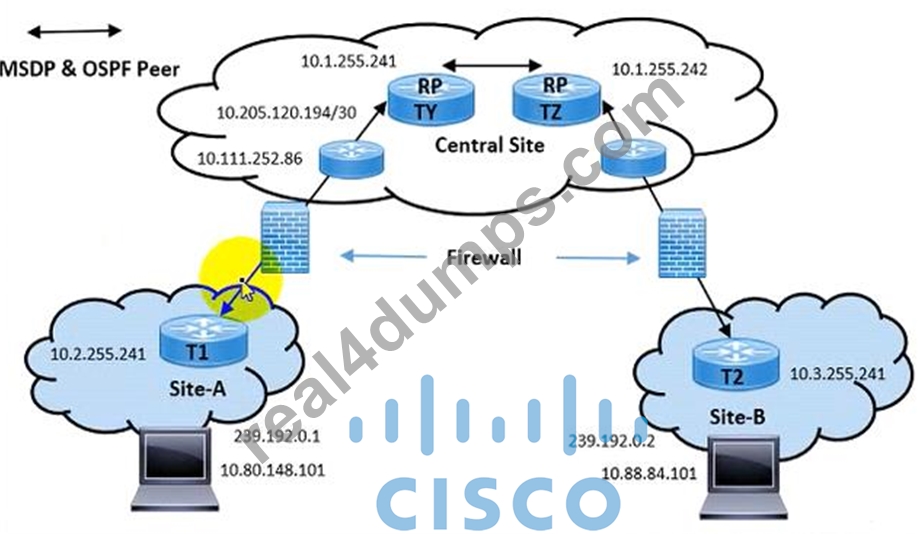
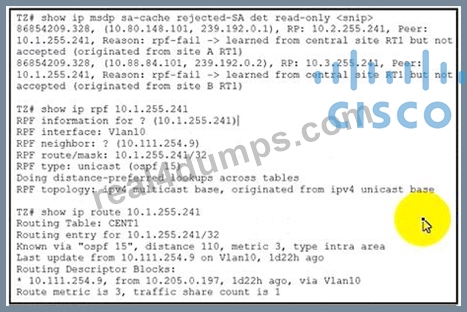
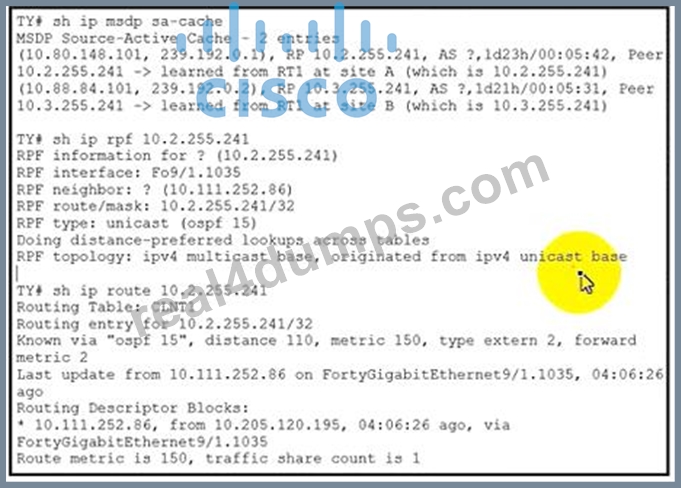
Refer to the exhibit. Multicast traffic destined from T1 and T2 routers to RP routers works well. A network engineer observes problems with multicast traffic flows between Site-A and Site-B. Site-A users fail to receive multicast stream on Site-B via RPTY site, while Site-B users fail to receive multicast stream on Site-Avia RPTZ site. Which action must be implemented to resolve the issues?
- A. Configure Site-A and Site-B in 10.80.14804
- B. Establish MDSP peering with interface IP subnet.
- C. Allow the OSPF and MSDP packets on the firewall.
- D. Configure direct OSPF peering between Site-A and Ste-B
Answer: C
NEW QUESTION # 13 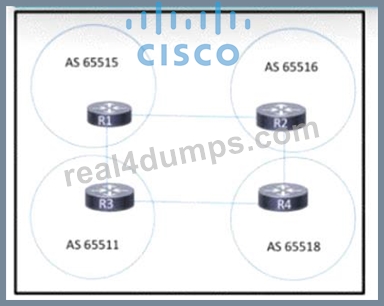
Refer to the exhibit. Routers R1. R2, R3. and R4 are peer routers that reside in different administrative domains. PIM-SM is running in each autonomous system, and EBGP is configured between the peers. A network administrator has just implemented MSDP between the connected peers. When the administrator enabled the MSDP configuration. R1 and R2 failed to establish a peering relationship. All other connected routers successfully established peering sessions Which action must the engineer take to resolve the issue between R1 and R2?
- A. Change the MSDP authentication method to clear text
- B. Set the same MSDP password on both peers
- C. Configure the peers to be in the same autonomous system.
- D. Implement BGP authentication between the peers.
Answer: B
NEW QUESTION # 14
Refer to the exhibit.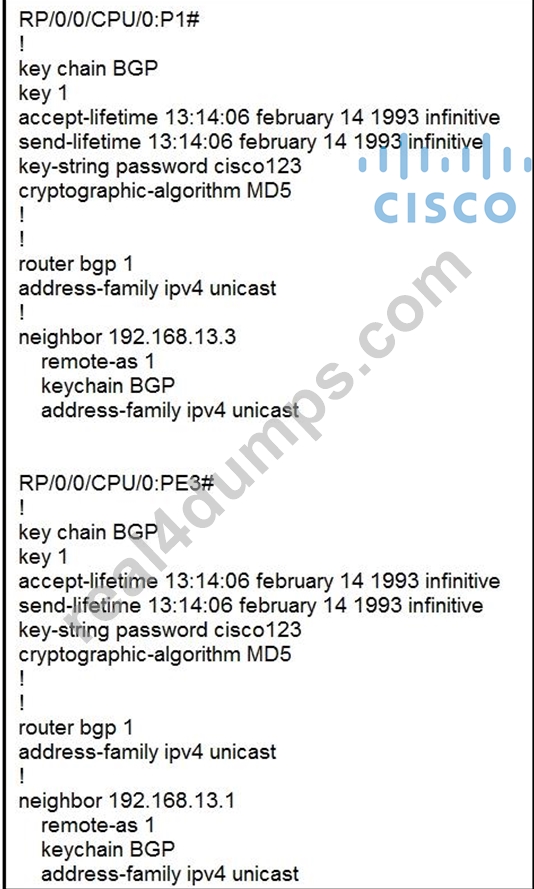
P1 and PE3 Cisco IOS XR routers are directly connected and have this configuration applied. The BGP session is not coming up. Assume that there is no IP reachability problem and both routers can open tcp port 179 to each other. Which two actions fix the issue? (Choose two.)
- A. Change MD5 to HMAC-ESP
- B. Change MD5 to HMAC-MD5
- C. Change MD5 to SHA-1
- D. Remove the send and accept lifetime under key 1
- E. Change MD5 to HMAC-SHA1-12
Answer: B,E
Explanation:
Reference:
sc40crsbook_chapter5.html
NEW QUESTION # 15
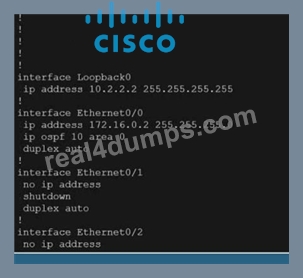
Refer to the exhibit.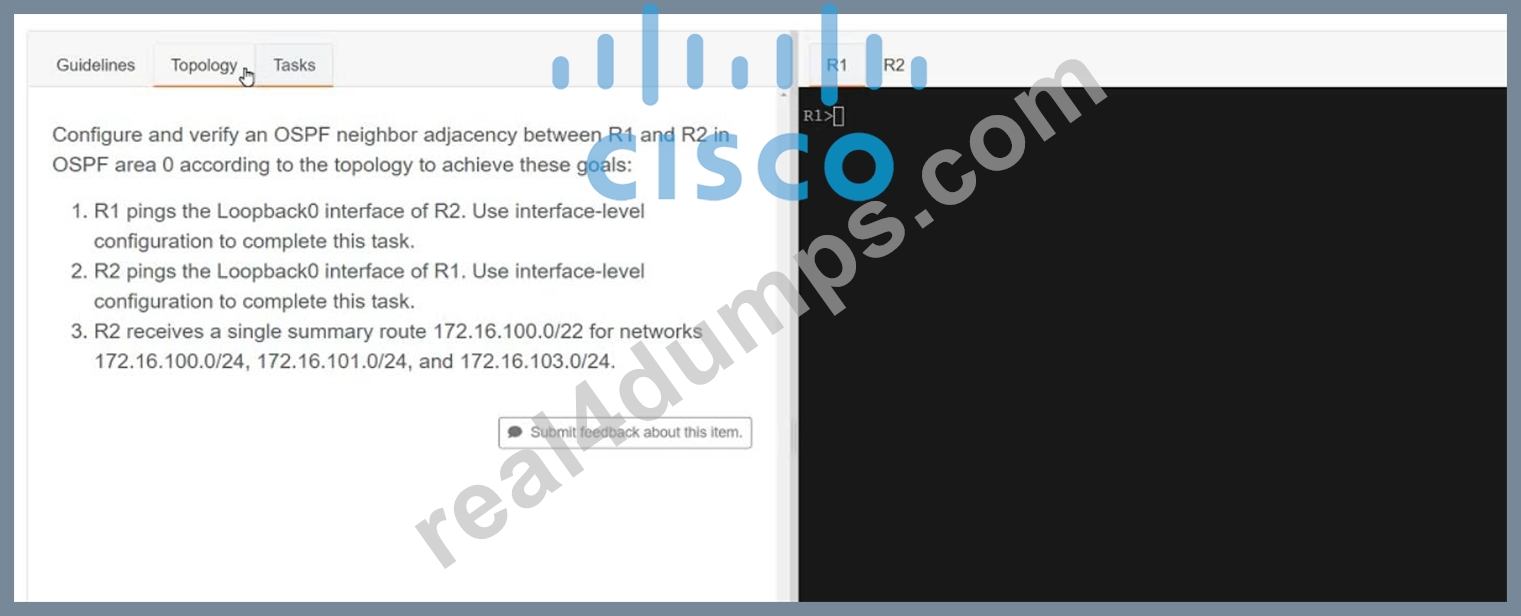
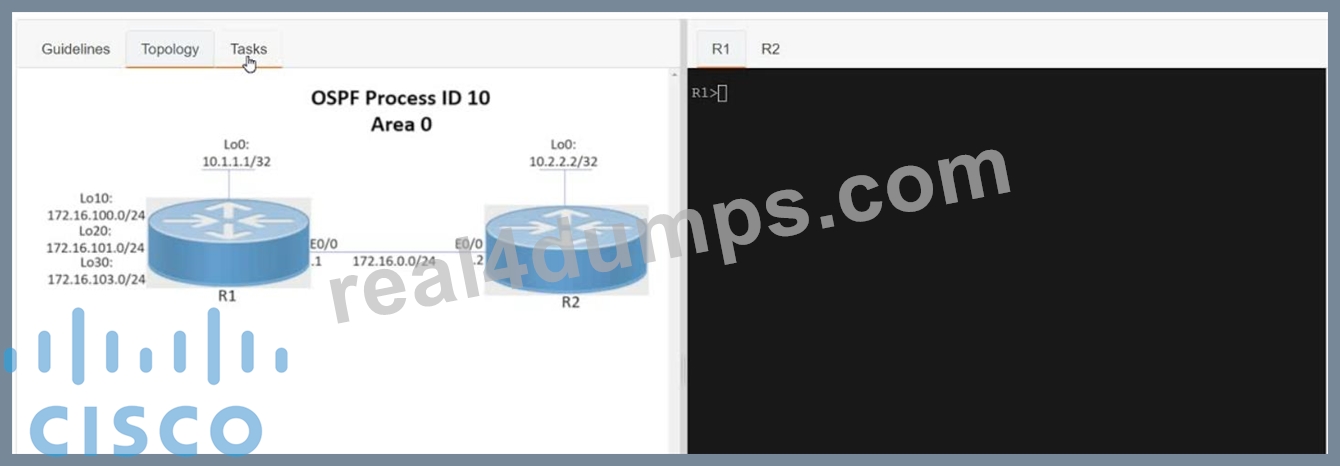
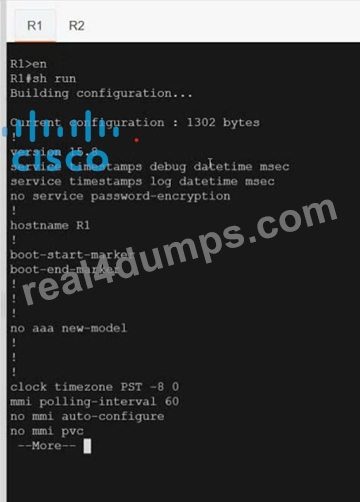
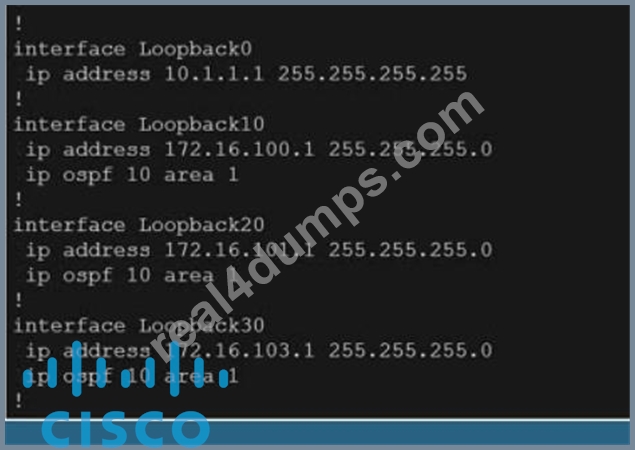
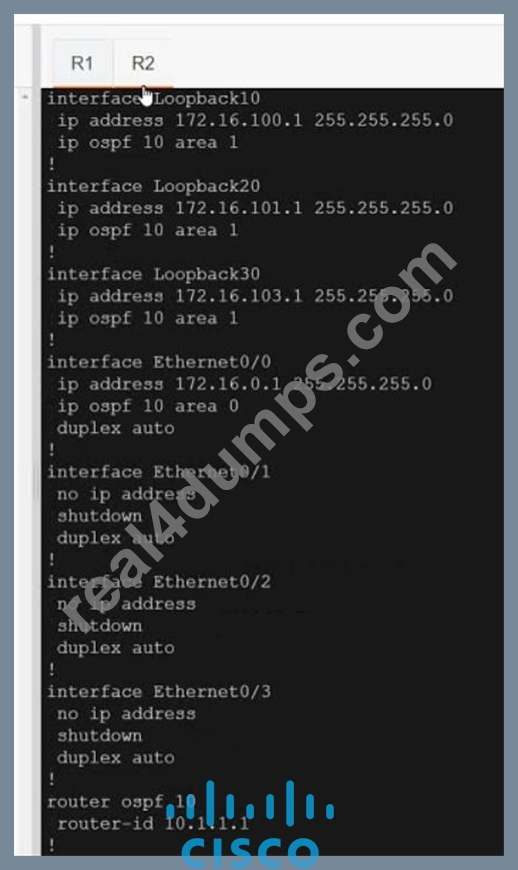
R2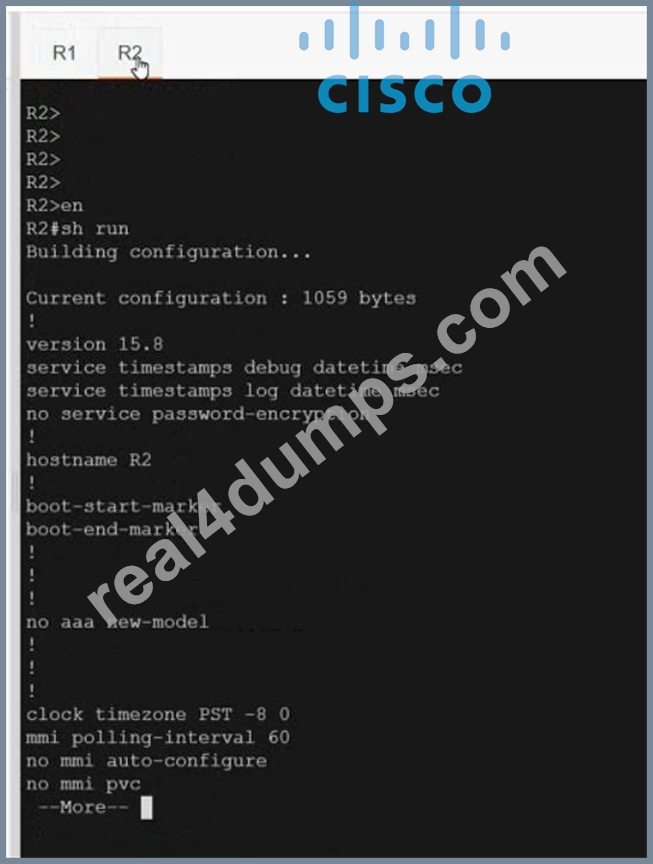
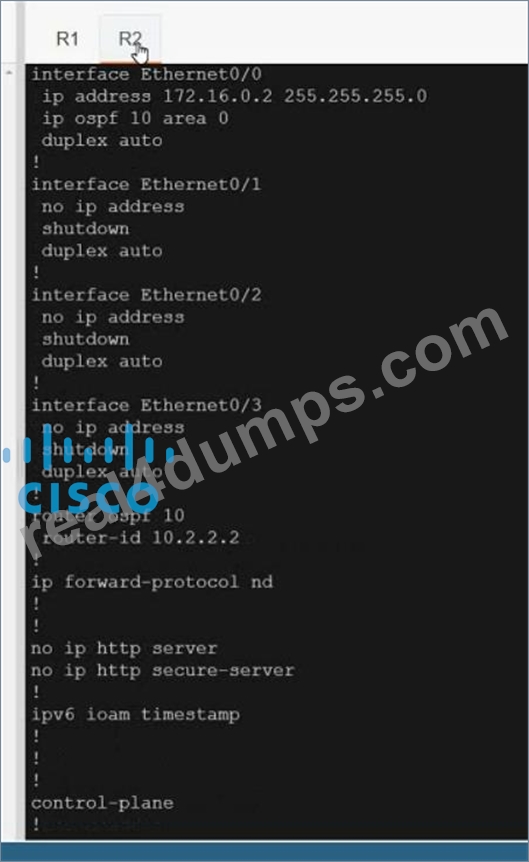
Answer:
Explanation:
See the solution below in Explanation.
Solution:-
R1
Int loopback0
Ip ospf 10 area 0
Int loopback10
Ip ospf network point-to-point
Int loopback20
Ip ospf network point-to-point
Int loopback30
Ip ospf network point-to-point
Router ospf 10
Area 1 range 172.16.100.0 255.255.252.0
Copy run start
Verification: -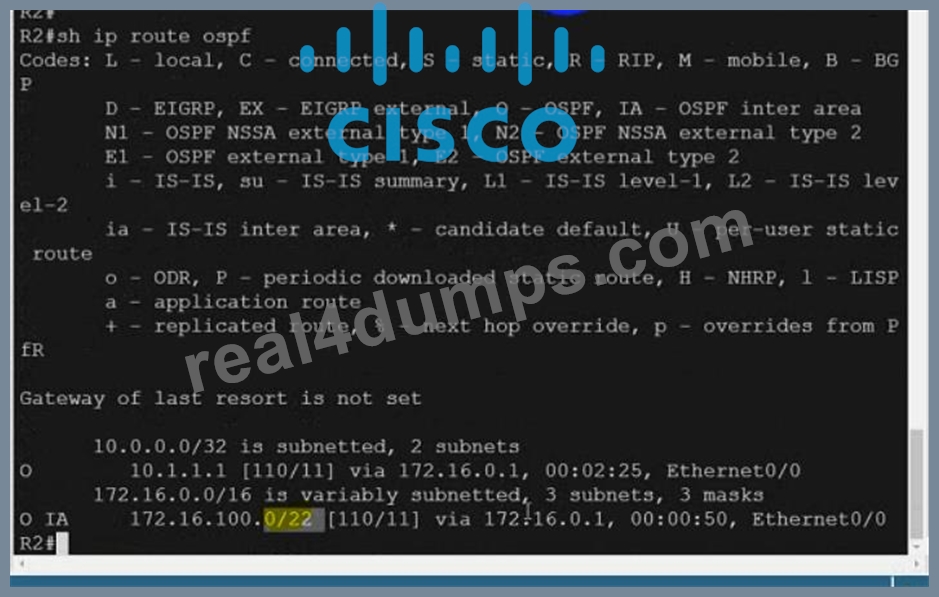
NEW QUESTION # 16
Which command is used to enable BIDIR-PIM under global configuration mode for Cisco IOS XE Sofware?
- A. ip pim bidir-enable
- B. ipv4 pim bidir-enable
- C. ip multicast-routing
- D. ip pim bidir
Answer: A
Explanation:
Explanation/Reference: https://www.cisco.com/c/en/us/td/docs/ios-xml/ios/ipmulti_pim/configuration/xe-3s/imc-pim-xe-3s- book/imc_basic_cfg.html
NEW QUESTION # 17 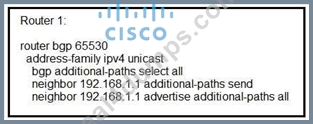
Refer to the exhibit. Which statement about this configuration is true?
- A. Router 1 sends and receives multiple best paths from neighbor 192.168.1.1
- B. Router 1 receives only the best path from neighbor 192.168.1.1
- C. Router 1 receives up to two paths from neighbor 192.168.1.1 for all routes in the same AS
- D. Router 1 sends up to two paths to neighbor 192.168.1.1 for all routes
Answer: A
Explanation:
Explanation
NEW QUESTION # 18
Refer to the exhibit.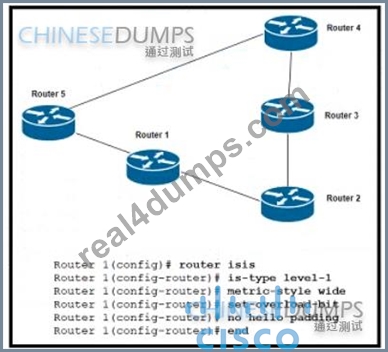
Refer to the exhibit. A network engineer commissioned Router 1, which connects lo Router 2 and Router 5 Router 1 participates in IS-IS routing with other routers, but it is not used for transit traffic. Traffic from Router 2 to Router 5 is expected to travel via Router 1 but the traffic is travelog via Router 3 and Router 4 Which action reserves this problem?
- A. Remove the overload bit on Router 1.
- B. Remove the hello padding on Router 5
- C. Add the overload bit on Router 5
- D. Add hello padding on Router 1
Answer: A
NEW QUESTION # 19
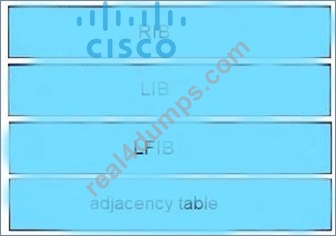
An engineer is troubleshooting end-to-end customer traffic across an MPLS VPN service provider network. Which tasks should the engineer use to solve the routing issues? Drag and drop the table types from the left onto the most useful troubleshooting tasks/router types on the right. (Not all options are used.)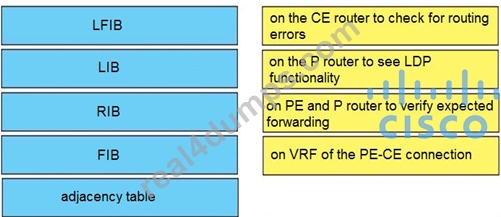
Answer:
Explanation: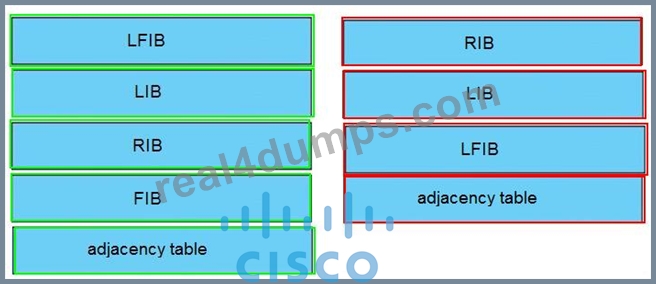
NEW QUESTION # 20
An engineer is troubleshooting end-to-end customer traffic across an MPLS VPN service provider network.
Which tasks should the engineer use to solve the routing issues? Drag and drop the table types from the left onto the most useful troubleshooting tasks/router types on the right. (Not all options are used.)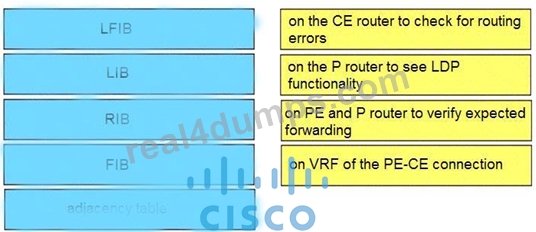
Answer:
Explanation: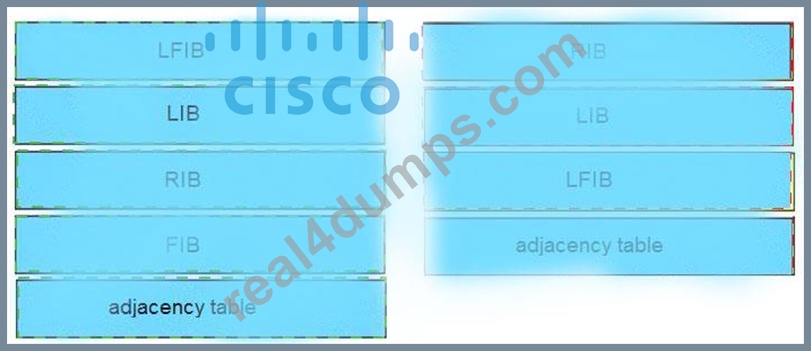
NEW QUESTION # 21
Refer to the exhibit. Router 1, Router 2, and Router 3 are co-located in an onsite data center of an office, but Router 4, Router 5, and Router 6 are installed in another data center several miles away. A network engineer is troubleshooting an RSVP- issue on the network. On most of the devices, the engineer can move all LSPs away from a selected interface and take it down for maintenance without interrupting traffic. However, when an interface on Router 3 is taken down, traffic on the network is disrupted. What must the engineer enable to resolve the issue on Router
3?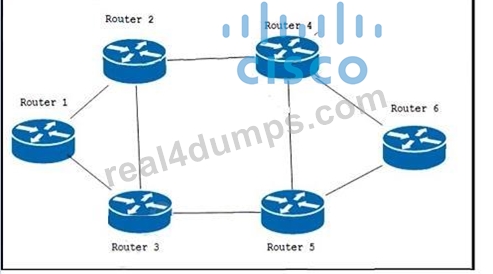
- A. FRR
- B. soft-disperse feature
- C. soft-preemption feature
- D. NSR
Answer: A
Explanation:
RSVP-TE (Resource Reservation Protocol - Traffic Engineering) is used to establish MPLS Traffic Engineering tunnels. When an interface on Router 3 is taken down, there is traffic disruption because no backup path is immediately available. Other routers are able to redirect traffic without issues, which indicates that Fast Reroute (FRR) is missing on Router 3.
FRR provides a local repair mechanism for MPLS TE tunnels. It allows a router to pre-calculate and pre-establish backup paths (also called detour paths) for primary LSPs. When the primary link or interface fails, traffic is rerouted immediately onto the backup path without significant delay.
By enabling FRR on Router 3, the LSPs will have pre-established backup paths, ensuring that traffic is redirected without disruption during interface maintenance or failure.
NEW QUESTION # 22
Refer to the exhibit.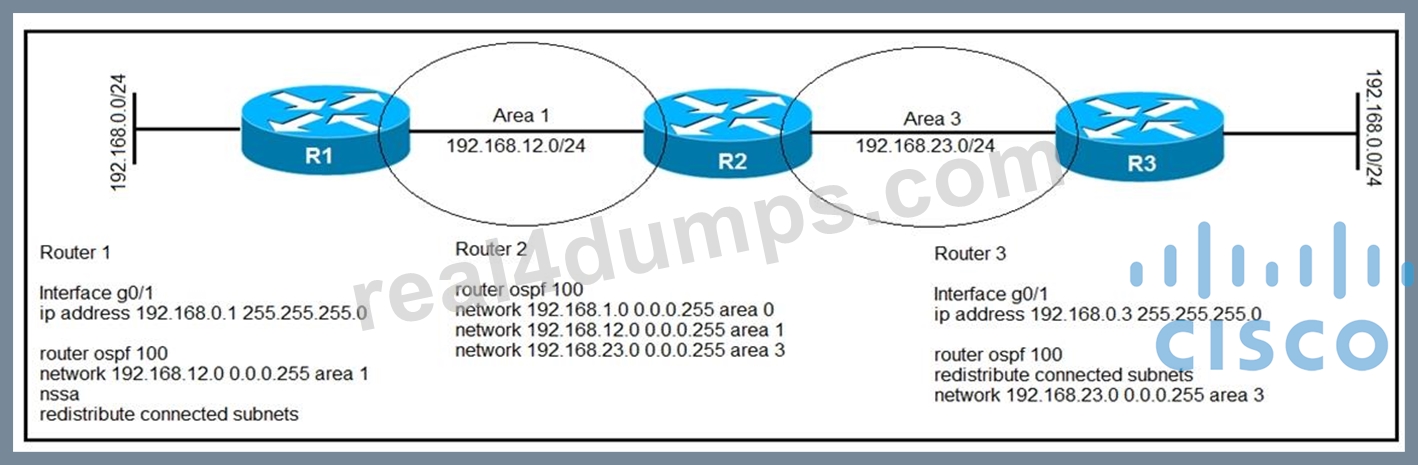
After troubleshooting an OSPF adjacency issue, routers 1, 2, and 3 have formed OSPF neighbor relationships. Which statement about the configuration is true?
- A. Router 2 receives a Type 5 LSAs from router 1 for its connected subnets
- B. Router 2 uses router 1 as the next hop for 192.168.0.0/24
- C. Router 2 uses router 3 as the next hop for 192.168.0.0/24
- D. Router 2 receives a Type 7 LSAs from router 3 for its connected subnets
Answer: A
NEW QUESTION # 23
Which requirement must be met while using parameter with conditional matching in routing policy definition?
- A. Parameters must be used in a hierarchal structure.
- B. Parameters must be applied only to BGP statements.
- C. Parameters must start with the $ symbol.
- D. Parameters must be used only in route maps.
Answer: C
Explanation:
In routing policy definitions, parameters are used for conditional matching and must start with the
$ symbol. The $ symbol designates a parameter variable that can be used in the policy logic to dynamically match conditions such as prefixes, communities, or attributes.
NEW QUESTION # 24
An engineer warns to map a multicast IP address to a multicast MAC.
How many bits are used to make the conversion?
- A. high-order 24 bits
- B. lower-order 24 bits
- C. higher-order 23 bits
- D. low order 23 bits
Answer: D
NEW QUESTION # 25
A network engineer is troubleshooting OSPF multiare A.
Which Cisco IOS XR feature should the engineer use in order to streamline OSPF issue?
- A. hierarchical CLI
- B. routing process enabled by default on all interfaces
- C. show ip ospf topology command
- D. DR support for topology management
Answer: A
Explanation:
OSPF Hierarchical CLI and CLI Inheritance
Hierarchical CLI is the grouping of related network component information at defined hierarchical levels such as at the router, area, and interface levels. Hierarchical CLI allows for easier configuration, maintenance, and troubleshooting of OSPF configurations. When configuration commands are displayed together in their hierarchical context, visual inspections are simplified. Hierarchical CLI is intrinsic for CLI inheritance to be supported.
With CLI inheritance support, you need not explicitly configure a parameter for an area or interface. In the software, the parameters of interfaces in the same area can be exclusively configured with a single command, or parameter values can be inherited from a higher hierarchical level-such as from the area configuration level or the router ospf configuration levels.
More information: https://www.cisco.com/c/en/us/td/docs/iosxr/ncs5500/routing/71x/b-routing-cg-ncs5500-71x/b-routing-cg-ncs5500-71x_chapter_011.html#con_1059437 Reference:
guide/rc40xr12k_chapter4.html#con_1059437
NEW QUESTION # 26
Refer to the exhibit. There is a BGP traffic path issue between Customer-1 and Customer-2.
Users from Customer-2 have reported file transfer issues. High utilization on the path between both customers causes many packet drops. Which configuration resolves the issue?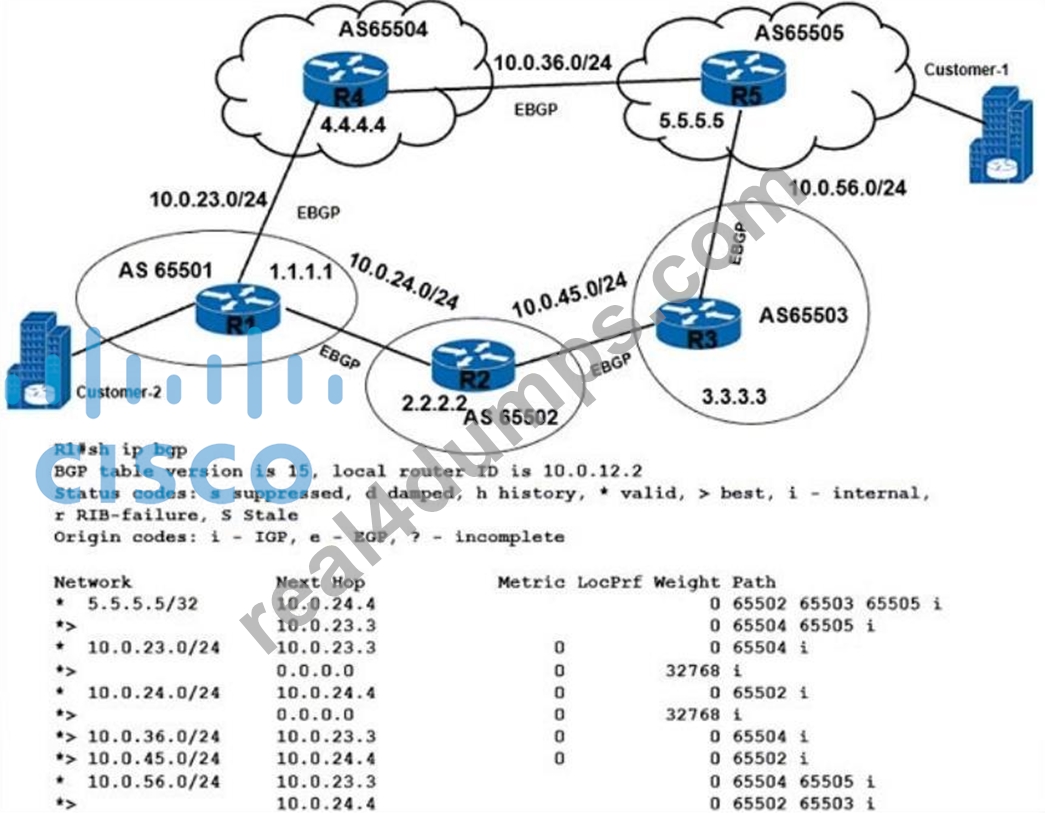
- A. R4#router bgp 65504
address-family ipv4 unicast
neighbor 10.0.23.3 remote-as 65501
neighbor 10.0.23.3 activate
neighbor 10.0.23.3 route-map PREPEND in
exit-address-family
exit
route-map PREPEND permit 10
set as-path prepend 65506 65507 - B. R1#neighbor 10.0.24.4 route-map LOCAL-PREF-150 in
route-map LOCAL-PREF-150
set local-preference 150
ip prefix-list 5-5-5-S seq 5 permit 5.5.5.5/32
route-map LOCAL-PREF-150 permit 10
match ip address prefix-list 5-S-5-5
set local-preference 150 - C. R4#router bgp 65504
neighbor 10.0.23.3 remote-as 65501
neighbor 10.0.23.3 filter-list 1 out
ip as-path access-list 1 deny ^65505$
ip as-path access-list 1 permit .* - D. R1#neighbor 10.0.23.3 route-map LOCAL-PREF-150 out
route-map LOCAL-PREF-150
set local-preference 150
Answer: A
NEW QUESTION # 27
Refer to the exhibit.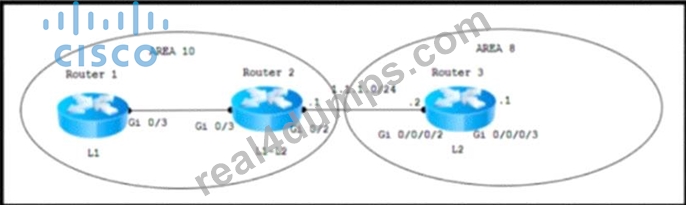
An engineer at a large ISP is troubleshooting suboptimal routing on a customer's IS-IS network with multiple Level 1-2 routers. The network consists of numerous routers that are configured for MPLS. When IS-IS picks the closest Level 1-2 router to exit the area, suboptimal routing occurs in Area 8 and Area 10. The other IGP protocols are running correctly, and the IS-IS adjacency between routers is established. Which action resolves the issue?
- A. Redistribute Level 2 prefixes into Level 1 on router 2.
- B. Configure the router as DIS for each of the interfaces on router 1.
- C. Configure each interface as either Level 1 or Level 2 circuit type on router 1.
- D. Disable advertisement of the default route on router 2.
Answer: A
NEW QUESTION # 28
......
Cisco 300-510 exam is part of the CCNP Service Provider certification track and serves as a prerequisite for the CCIE Service Provider certification. It covers a wide range of topics related to advanced routing solutions, including route manipulation, route redistribution, route filtering, and path control. Candidates are expected to have a deep understanding of the underlying routing protocols and their interaction with other networking technologies.
To pass the Cisco 300-510 exam, candidates must demonstrate their ability to troubleshoot complex routing issues and apply their knowledge to real-world scenarios. They must also have a solid understanding of network design principles and be able to recommend solutions that meet the specific needs of a service provider network. Overall, the Cisco 300-510 exam is a challenging but rewarding certification that can help IT professionals advance their careers in the fast-paced world of service provider networking.
Cisco 300-510 exam is a challenging exam that requires a thorough understanding of network technologies and protocols. 300-510 exam consists of 60-70 multiple-choice and scenario-based questions, and candidates are given 90 minutes to complete it. 300-510 exam is available in English and Japanese and can be taken at any Pearson VUE testing center worldwide.
300-510 Exam Dumps - 100% Marks In 300-510 Exam: https://prep4sure.real4dumps.com/300-510-prep4sure-exam.html
